

What Is Your Home Saying to Your Nervous System?
/How Thoughful Interior Design can Reduse Stress and Help You Feel More at Home
Have you ever walked into a room and immediately felt yourself exhale?
Maybe it was a cozy reading nook tucked beside a sunny window, a boutique hotel with soft lighting and natural textures, or even a friend's living room where everything simply felt... easy.
Then there are the opposite kinds of spaces. The rooms that somehow leave you feeling restless, distracted, or mentally exhausted, even when you can't quite explain why.
It isn't your imagination. Your home is constantly communicating with your nervous system.Every room sends subtle messages through light, color, texture, sound, scent, layout, and even the way you move through it. While your mind may be focused on your never-ending to-do list, your body is quietly processing thousands of environmental cues that influence how safe, relaxed, or overwhelmed you feel.
This is one of the reasons I'm so passionate about designing homes that support well-being, not just visually, but emotionally and physically too.
Because beautiful design isn't simply something we admire. It's something we experience.
Your Nervous System Notices Your Home Before You Do
We often think of interior design as something purely visual. We notice paint colors, furniture styles, and carefully chosen accessories. But long before we consciously decide whether we like a room, our nervous system has already formed an opinion.
Our brains are constantly asking questions like:
Am I safe here?
Can I relax here?
Is this space demanding my attention?
Does this environment help me recharge?
These responses happen automatically. It's why certain spaces immediately invite you to curl up with a book while others make you feel like you should hurry through them.
Good interior design isn't just about creating beautiful rooms. It's about creating environments that support the way we want to live, feel, and function every day.
When we begin designing with wellness in mind, our homes become more than collections of furniture. They become spaces that actively care for us.
Small Design Choices Create Big Emotional Shifts
One of my favorite questions to ask clients isn't, "What style do you love?"
Instead, I ask:
"How do you want your home to make you feel?"
That question changes everything. Rather than focusing only on aesthetics, we begin noticing the subtle design choices that influence our daily lives. Think about your own home.
Perhaps there's a kitchen countertop that's always covered with mail, school papers, and unopened packages. Every morning, before you've even poured your coffee, your brain receives another reminder of unfinished tasks. That visual clutter quietly becomes mental clutter.
Or maybe your living room relies on one bright overhead light that feels practical during the day but harsh after sunset. Your body continues receiving signals to stay alert when it's actually trying to wind down.
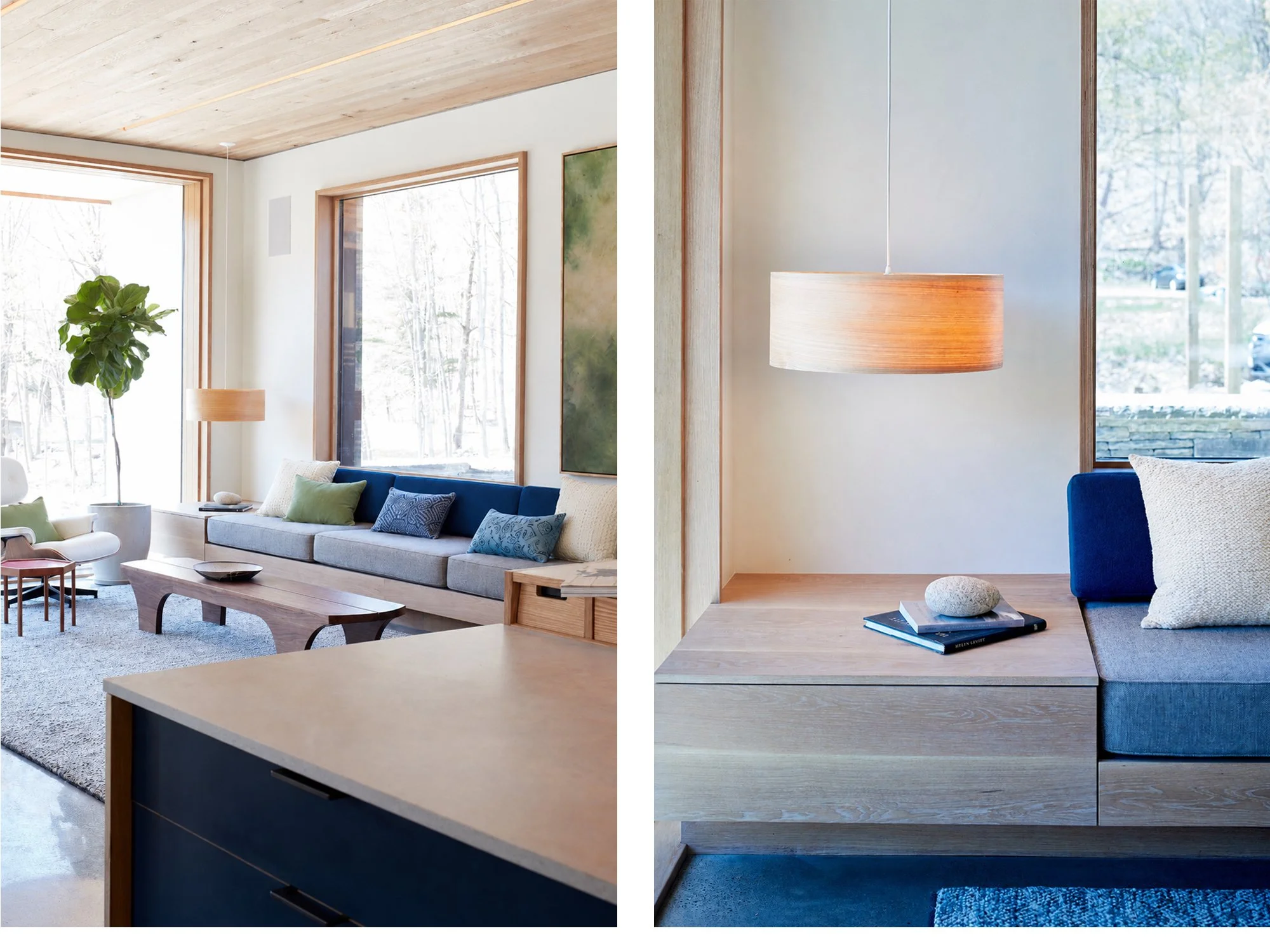
Now compare that to spaces filled with natural materials. Warm wood grains, soft linen fabrics, stone surfaces with gentle texture, handmade ceramics, a woven basket that adds character while keeping everyday items organized.
These materials connect us to nature in subtle ways. They introduce warmth, softness, and authenticity that synthetic environments often lack. Then there's natural light. Have you ever noticed how the chair beside the window somehow becomes everyone's favorite seat in the house? It isn't an accident.
Humans are naturally drawn toward daylight. Exposure to natural light supports our circadian rhythms, improves mood, and helps regulate healthy sleep patterns. Simply repositioning furniture to embrace daylight can completely change how a room feels.
Individually, none of these choices seem dramatic. Together, however, they shape your experience of home every single day.
Designing a Home That Supports Calm
Creating a calming home doesn't require a complete renovation or an unlimited budget. More often than not, it's about making thoughtful, intentional changes that allow your environment to better support your daily life.
Some of the simplest ways to create a more restorative home include:
Clearing one frequently used surface to reduce visual clutter.
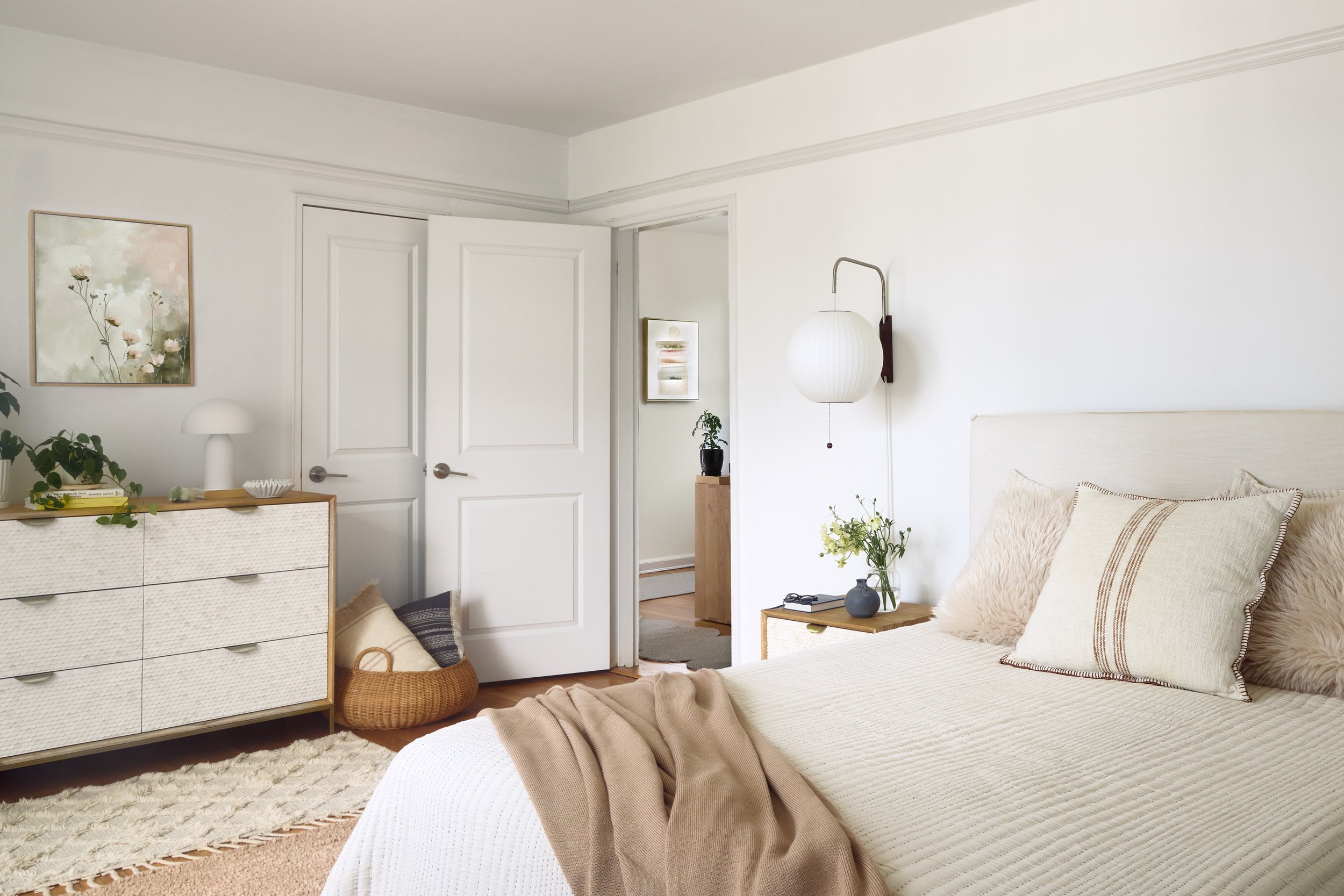
Layering lamps and warm lighting instead of relying solely on overhead fixtures.
Incorporating natural materials like wood, linen, cotton, wool, or stone.
Bringing plants indoors to strengthen your connection with nature.
Choosing calming color palettes inspired by the outdoors.
Creating one dedicated corner for rest, reading, reflection, or quiet conversation.
Improving the flow of a room so movement feels effortless instead of cramped.
These aren't just decorating decisions. They're investments in your everyday well-being.The goal isn't perfection. It's creating a home that gently supports you instead of constantly demanding your attention.

Where Sustainability and Wellness Naturally Meet
One of the things I love most about holistic interior design is how beautifully wellness and sustainability complement one another. Many of the choices that help us feel calmer also happen to be kinder to the planet.
Choosing responsibly sourced wood, natural fibers, low-VOC paints, vintage furnishings, and locally crafted pieces often creates healthier indoor environments while reducing environmental impact.
Maximizing daylight lowers energy use while boosting mood. Adding plants improves the feeling of connection with nature. Selecting timeless pieces instead of chasing short-lived trends encourages slower, more intentional decorating that lasts for years.
Sustainability doesn't have to feel restrictive or overwhelming. Instead, it becomes another way of designing with purpose, creating spaces that care for both the people who live there and the world outside their windows.
When beauty, wellness, and sustainability work together, our homes begin telling a different story. One of comfort, connection, and lasting intention.
A Gentle Invitation to Listen
This week, instead of looking at your home with a critical eye, I invite you to approach it with curiosity. Walk through each room slowly and simply notice how you feel.
Ask yourself:
Where do I naturally relax without thinking?
Which room helps me breathe a little deeper?
Is there a space I tend to avoid?
What feels distracting or overwhelming?
What's one small change I could make this week?
Sometimes the smallest adjustments create the biggest emotional shifts, a lamp moved into a darker corner, a basket that finally gives clutter a home, a favorite chair repositioned beside a sunny window, fresh greenery on the dining table, the soft texture of a linen throw.
These little moments may seem insignificant, but together they create an environment that quietly supports your nervous system every single day.
Home Should Feel as Good as It Looks
Beautiful homes are wonderful. But the most meaningful homes are the ones that help us feel grounded, restored, and fully ourselves. Our homes are always speaking to us, and perhaps more importantly, they're speaking to our nervous systems.
When we begin listening to those quiet conversations, we discover that thoughtful interior design is about so much more than aesthetics. It's about creating spaces that reduce stress, nurture well-being, and support the life unfolding within their walls.
Because the best-designed home isn't necessarily the most expensive or the most photographed. It's the one that welcomes you home, helps you exhale, and reminds you that you've created a place where you truly belong.
Here's to creating homes that nurture, soothe, and inspire, one thoughtful choice at a time.
Ready to create a home that feels more beautiful, functional, and uniquely yours? Let's start with a conversation. Schedule a complimentary Discovery Call and tell me about your project.
