

How to Renovate Without Regret: Designing a Home You'll Still Love 10 Years From Now
/Is this me or did Instagram convince me I like it?
Have you ever saved a room on Instagram and thought, Oh my gosh, I love this, only to look at it six months later and wonder what, exactly, you loved about it? You’re not alone.
We have more access to beautiful interiors than ever before. Pinterest boards overflow with inspiration. Instagram offers an endless stream of gorgeous kitchens, beautifully styled rooms, and aspirational homes, and as we all know, once you start looking, the algorithm will happily feed you a lifetime’s worth of them. And every few months, there seems to be a new color, material, furniture silhouette, or “must-have” design detail we’re told will completely transform our homes.
It’s inspiring. It’s also exhausting. And when you’re renovating a home, when the decisions involve real money, permanent materials, construction timelines, and choices you may be living with for the next decade or more, that endless stream of inspiration can quickly turn into something else: What if I choose the wrong thing?
Will this look dated in five years? Should I be doing what everyone else is doing? Is this too trendy? Is this too boring? What if I spend all this money and regret it? These are totally valid questions, believe me I get it. A renovation is a significant investment, both financially and emotionally. I think we’ve become so focused on creating homes that will look “timeless” that sometimes we forget the more important goal:
Creating a home that will continue to feel like you.
First, Let’s Talk About Trend Fatigue
There’s nothing wrong with design trends, I love a good trend article as much as anyone. For instance, a recent Elle Decor article, “6 Fall 2026 Interior Trends to Watch, According to Experts,” included a few I can absolutely get behind: the dark wood revival (sure) and the wellness aesthetic (absolutely). Others? Reflective surfaces (meh). Material tension? Not on my watch.
Like I said, Trends aren’t bad, they introduce us to new ideas, revive forgotten materials, encourage experimentation, and often reflect broader cultural shifts in how we want to live. But they’re meant to be inspiration, not instructions.
After years of seeing beautifully styled but remarkably similar interiors online, I think many of us are craving something different. We’re seeing a move toward homes with more personality, deeper colors, natural materials, vintage pieces, richer woods, patina, collected objects, and rooms that don’t necessarily fit neatly into one particular “style.”
Because your home shouldn’t look like an algorithm designed it. It should look and more importantly, feel like people actually live there. There should be books you’ve read. Art that means something to you. A chair with a story. Something inherited. Something slightly imperfect. Maybe even something that would never make it onto a designer’s “must-have” list but makes you smile every single time you see it.
That’s where a home starts to become interesting. And it’s also where we begin to move away from the question of What style is this? and toward a much more important one:
How does this home make me feel?
Why I Stopped Asking Clients, “What’s Your Design Style?”
Early in the design process, there’s one question you might expect an interior designer to ask: What’s your design style?
Modern? Traditional? Transitional? Organic? Contemporary? Maybe a little mid-century mixed with something European and collected? For years, I asked some version of that question too. And do you know what I discovered? A lot of people simply don’t know. Or they’ll tell me, “I don’t really have a style.”
Most of us don’t experience our homes through neatly defined design categories. You probably don’t walk into your living room at the end of a long day and think, Ahhh… transitional.You think, This feels good. Or maybe you think, Something about this room has never felt quite right. So I stopped asking that question. Instead, I try to go deeper.
Your Style Is Often a Feeling Before It’s a Look
When I begin working with a client, I’m much more interested in understanding how they want to feel in their home than what label they would give their style. Do you want your home to feel calm and restorative? Warm and cocooning? Light and energizing? Sophisticated, but never precious? Do you want people to walk in, kick off their shoes, and immediately feel comfortable? Do you crave quiet and simplicity because the rest of your life feels busy? Or maybe you want your home to feel layered, interesting, soulful, and a little unexpected. These conversations tell me far more than the words modern or traditional ever could.
We talk about how they live. What they’re naturally drawn to. The places where they feel most at ease. The colors they love. The materials they want to touch. What they enjoy about their current home and what has never quite worked.
I want to know about mornings. Where do you drink your coffee? Where does everyone end up at the end of the day? Do you entertain? Do you want big dinner parties or intimate dinners with a few close friends? Where does clutter inevitably accumulate? Where do you need quiet? How do you want to feel when you walk through your front door?
These may not sound like traditional interior design questions, but the answers influence nearly every design decision that follows. Sometimes a client will tell me they love modern interiors, but every image they respond emotionally to contains warm wood, handmade materials, soft textiles, vintage pieces, and beautiful imperfections.
Or maybe someone loves the history and romance of an old European hotel but also needs their own home to feel uncluttered and serene. Because underneath all of those conversations, their style is there. They just may not have had a name for it. And frankly, I’m not sure we always need to give it one. After a deep enough conversation, the direction begins to reveal itself naturally.
We aren’t choosing their style. We’re uncovering it together.
Design the Feeling First
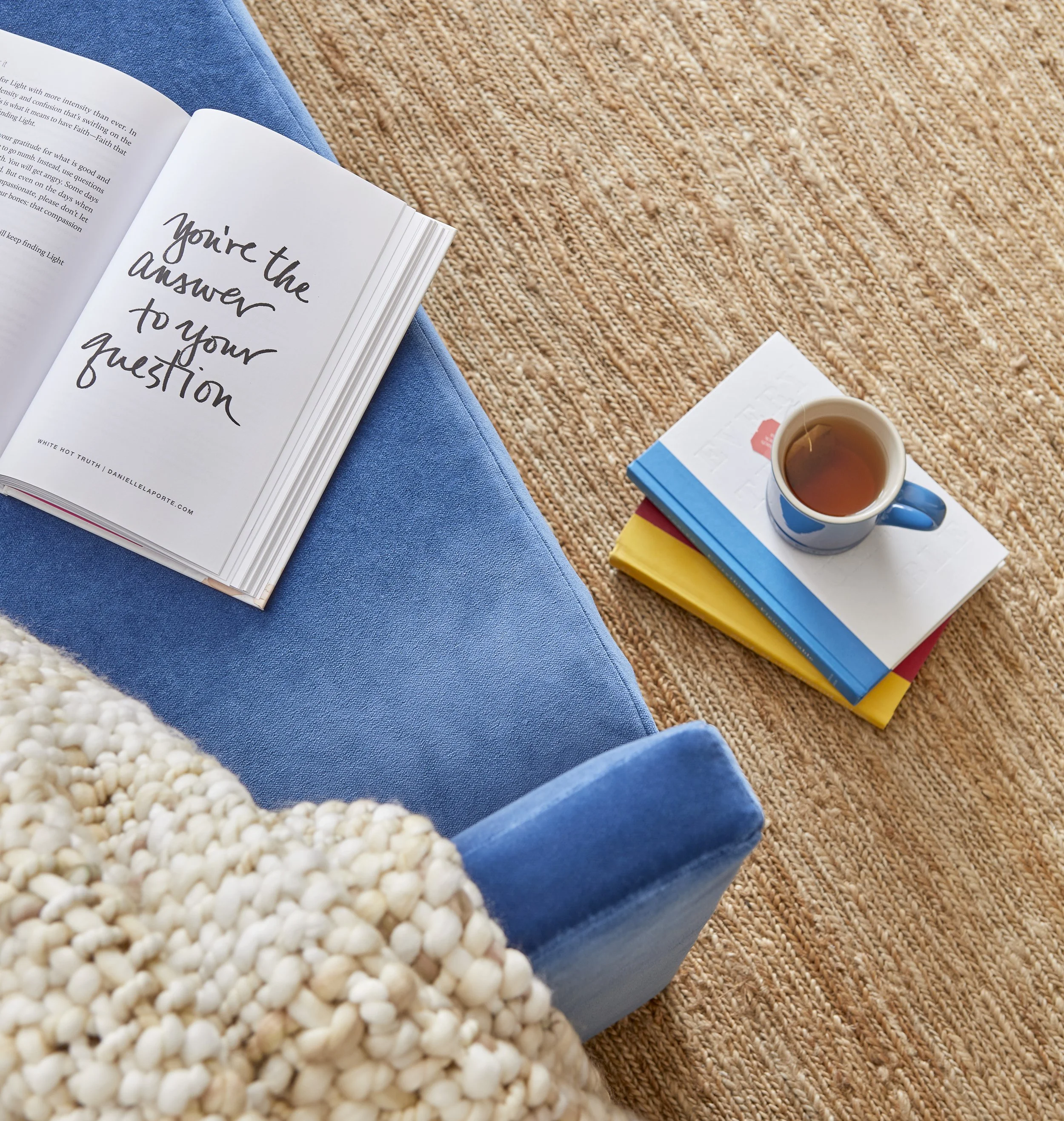
This idea becomes even more powerful when we move from talking about an entire home to thinking about individual rooms. If you tell me you want your bedroom to feel like an exhale at the end of the day, that gives us a meaningful starting point. We can begin thinking about soft lighting, natural fibers, tactile materials, quieter colors, fewer visual distractions, and even what you see first when you wake up in the morning.
If you want your kitchen to feel like the heart of your home, a place where friends linger with a glass of wine while you cook, then we think about gathering. How people move through the room. Where they sit. How the lighting changes from morning to evening. How the materials feel. Whether the island invites someone to pull up a stool and stay awhile.
The aesthetic starts revealing itself through the life you want to live there.
And that is very different from starting with a Pinterest board labeled Modern Organic Kitchen and trying to recreate it. A beautiful home that fights against the way you actually live will eventually become frustrating. A beautiful home that supports the way you live feels entirely different. That’s the kind of design that lasts.
Now, this doesn’t mean I don’t use Pinterest boards or inspiration images with my clients. I absolutely do. In fact, I find that most people can respond to an image much more easily than they can explain exactly what they want in words. But I’m less interested in recreating the room in the photograph and much more interested in how that room makes you feel.
Does it feel calm? Warm? Collected? Airy? Cozy? Does it make you want to curl up and stay awhile? Is it the natural light you’re responding to, the softness of the materials, the sense of simplicity, or maybe the way nothing feels too perfect? Those responses tell me so much more than a label like Modern Organic Kitchen ever could.
Know Where to Be Timeless and Where to Have Fun
Once we understand the feeling and overall direction, we can start making actual design decisions. One of the easiest ways to avoid renovation regret is to separate your foundational choices from your decorative choices.
Your foundational choices are the things that are expensive, disruptive, or difficult to change:
Flooring
Cabinetry
Architectural millwork
Countertops and stone
Plumbing fixtures
Built-ins
Major lighting
Quality Furnishings
These are the places where I tend to encourage thoughtful restraint, not boring, but intentional. Then there are the layers that are easier to evolve over time. Paint. Pillows. Art. Lamps. Accessories. Smaller furnishings. Even wallpaper in the right application. This is where you can experiment a little more. My general rule is simple:
The harder and more expensive something is to replace, the less you want that decision to depend entirely on what is trending right now.
That doesn’t mean avoiding personality. Quite the opposite. It means asking whether you genuinely love something or whether you’ve simply seen it so many times that it has started to feel like the “right” choice. There’s a big difference.
Choose Materials That Get Better With Age
This might be one of my favorite ways to think about timeless design. Instead of asking: Will this material still look new in ten years? Try asking:
Will this material still look beautiful in ten years?
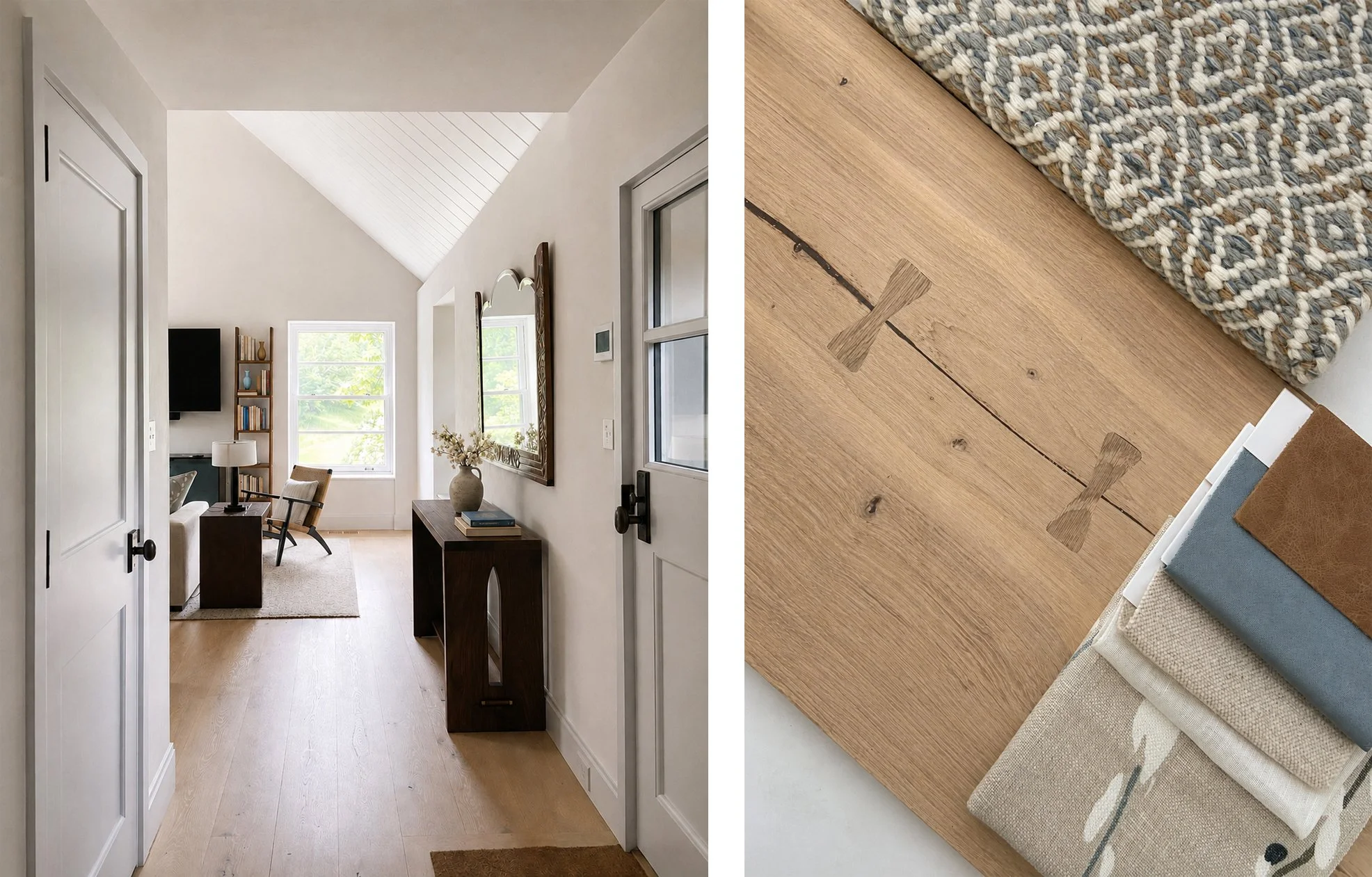
Those are not the same question. I’m drawn to natural materials partly because they are allowed to change. Wood develops character. Unlacquered metals deepen and patina. Natural stone tells the story of the home around it. Linen softens. Leather wears in. Vintage furniture already arrives with a past. There’s something wonderfully human about materials that don’t need to remain pristine to remain beautiful. And this is where sustainability and timeless interior design naturally intersect.
Sustainable design doesn’t always mean finding the newest product with the greenest label. Sometimes sustainability is much simpler:
Choose less. Choose better. Keep it longer.
Investing in a well-made table you’ll own for twenty years can be more meaningful than replacing a less expensive one every few years because the style has changed. The same goes for stone, cabinetry, flooring, lighting, and furniture. Longevity is sustainable. And, frankly, it makes for a more soulful home too.
Let Your Home Tell Your Story
This is the part no trend report can give you. Maybe it’s an antique dresser. A painting you bought on a trip you still talk about. A bowl your child made in ceramics class. A vintage chair that you got from your grandmother that you reupholstered. Books you actually read. Family photographs. Objects collected slowly rather than ordered all at once to fill a shelf. These things create emotional texture. They remind us where we’ve been, who we love, and what matters to us.
And as perfectly styled rooms become easier and easier to replicate, I believe these deeply personal layers are becoming even more important. Because no one else can have your story. And that may be the most timeless design element of all.
Timeless Does Not Mean Beige
Somewhere along the way, “timeless” became synonymous with white walls, pale oak, cream upholstery, and an extremely cautious relationship with color. And while I love a quiet palette when it suits the home and the people living there, timeless design can absolutely have personality. A deep green library can be timeless. A patterned wallpaper can be timeless. A burgundy velvet chair can be timeless. Beautifully veined stone can be timeless.
Pattern, color, antiques, sculptural lighting, and interesting textiles can all live in a home for decades. The question isn’t whether something is bold. The question is whether it has meaning and staying power for you.
If you have loved blue for your entire adult life, please don’t suddenly decide you need an all-beige home because beige happens to be having a moment. And conversely, if you genuinely love a current trend, use it! Your home isn’t a museum. It’s allowed to evolve.
Design for Future You, Too
When planning a renovation, we naturally think about what we need right now. But one of the benefits of slowing down during the design process is having the opportunity to ask:
What might life look like here five or ten years from now?
Maybe your children will become teenagers and suddenly the kitchen needs to accommodate six friends appearing without warning. Maybe you’ll work from home more often. Maybe aging parents will visit for longer stretches. Maybe your entertaining style will change. Maybe this house you thought you’d stay in for five years quietly becomes your forever home. Good design leaves room for life to evolve.
That might mean thinking carefully about circulation, storage, flexible rooms, lighting, accessibility, furniture arrangements, and the way spaces can serve more than one purpose. A timeless home isn’t frozen in time.
It’s adaptable.
Slow Down…Good Design Takes Time
I know this isn’t always what someone eager to start construction wants to hear, but the thinking part matters. Renovation research consistently shows just how significant the planning phase can be for major projects. And while months of planning may sound like an eternity when you’re staring at the kitchen you desperately want to tear out, thoughtful preparation can save an incredible amount of frustration later.
Because once construction starts, decisions become expensive. Moving a line on a drawing is easy. Moving plumbing after the floor is installed? Less so.
Good design considers the whole home, the sightlines, proportions, materials, lighting, function, transitions, furnishings, and all those tiny details that may not seem important individually but collectively determine how a room feels. Sometimes slowing down at the beginning is exactly what allows the finished home to feel effortless in the end.
So, How Do You Know You’re Making the “Right” Choices?
Here’s the slightly frustrating answer: There isn’t one universally right choice.
There is only the choice that makes sense for your home, your lifestyle, your values, and the way you want to feel in your space. When you’re considering something for your renovation, ask yourself: Would I still choose this if I hadn’t seen it on Instagram? Does this feel appropriate for the architecture of my home? Will this work for the way we actually live? Do I love it or do I love that it’s popular? Will it age beautifully?
And perhaps most importantly:
Does it contribute to the way I want to feel in my home?
Those questions will take you much further than any list of what’s “in” or “out” this year.
A Home You’ll Love 10 Years From Now
I don’t think the goal of a renovation should be creating a home where someone walks in ten years from now and says: Wow, you really nailed the trends of 2026. Actually, that may be exactly what we’re trying to avoid.
The goal is a home that feels layered and comfortable. One that holds memories. One where materials become richer with age rather than disposable with time. A home that supports your morning routines, your dinner parties, your quiet moments, your messy moments, and all the versions of life that happen in between.
And hopefully, when someone walks through the door, they don’t immediately recognize the designer, the trend, or the Pinterest board behind it. Instead, they say:
“This feels so completely like you.”
Ready to create a home that feels more beautiful, functional, and uniquely yours? Let's start with a conversation. Schedule a complimentary Discovery Call and tell me about your project.
